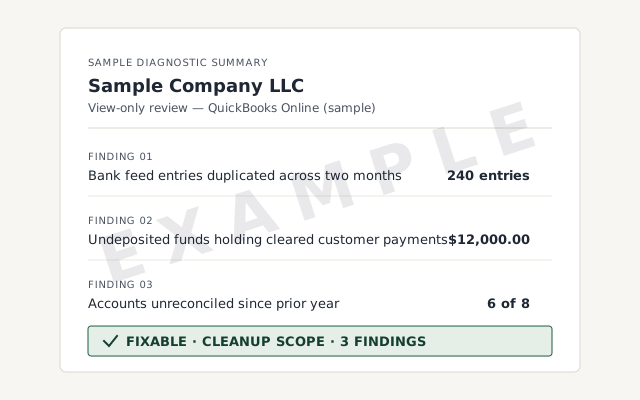
 Sample workflow — not a specific client’s data
A real diagnostic summary
The written read-out that tells you whether it is access or genuine file damage.
Error -6189, -816
File locked, or its helper files out of sync? Here's how it clears.
QuickBooks error -6189, -816 means the program could not get clean access to your company file — usually because the .ND and .TLG helper files no longer match the file, or the file is already open by another user or a background process. Restarting, renaming those helper files, and running QuickBooks File Doctor clears most cases. Occasionally it signals real damage.
Who this affects
You will usually see -6189, -816 when QuickBooks reaches the company file but cannot open it cleanly. Two everyday situations cause it. First, the small helper files that sit beside your company file — the network descriptor (.ND) and the transaction log (.TLG) — have fallen out of sync with the file, often because the company file was copied or moved without them. Second, the file is already open: another user is in it, or a background QuickBooks process from a crash or an interrupted session is still holding it. In both cases the accounting data is generally fine. QuickBooks simply cannot get the exclusive, matched access it needs to open the file.
Start here
-6189, -816 — an access fix, or a damaged file?
An access fix
Restarting, renaming the .ND and .TLG files, or closing another session clears most -6189, -816 messages.
Now suspect damage
If the file will not open after a reboot, renamed helper files, and File Doctor, the file itself may be damaged.
See file repairFix it yourself
Work through these in order. The early steps clear a file that was simply locked; the later steps rule out the helper files and let QuickBooks re-examine the file. If any step opens the file, you are done.
Reboot the machine that stores the company file and every workstation that opens it. A restart releases a file that a crashed or background QuickBooks process was still holding — the single most common -6189, -816 cause.
From the computer that stores the file, open it in single-user mode. This confirms no other user is in the file and gives QuickBooks the exclusive access it wants for this test.
In the folder holding the company file, rename the file that ends in .ND and the file that ends in .TLG — add .OLD to each name. They carry no accounting data, and QuickBooks rebuilds fresh, matched copies the next time the file opens.
Open the QuickBooks Tool Hub and run QuickBooks File Doctor on the company file. It checks and repairs the network and file-access problems behind many -6189, -816 messages.
Open the company file again from its proper location. If access was the issue, -6189, -816 clears and the file opens normally.
The access fix, in order
When to call us
If the file still throws -6189, -816 after you have rebooted, renamed the .ND and .TLG files, and run File Doctor, access is no longer the cause. A file that refuses to open once the helper files and other sessions have been ruled out is showing signs of damage. That is a file repair, and if data is already missing, a rescue. We diagnose on a copy, so your original file is never put at further risk while we find out whether it is access or genuine damage — and where a Desktop repair needs admin-level access to the file, it runs over a screen-share or a hosted copy you control. Its close cousins behave differently: error -6000, -83 blocks the open at the folder-and-hosting level, while error 6123 tends to surface around restores and version mismatches.
Access ruled out, or not
When it is not QuickBooks
Some -6189, -816 cases are really operating-system or network problems wearing a QuickBooks error number. If the file lives on a server or a shared folder and the error follows a permissions change, a new antivirus rule, or a network reconfiguration, the fix is at the OS or network level — folder rights, firewall exceptions, or hosting settings — not inside QuickBooks. That work belongs with your IT support or network administrator. For the official product-support channel and Intuit's own guidance on this error, use Intuit's official support.
Sample workflow — not a specific client’s data
The written read-out that tells you whether it is access or genuine file damage.
We confirm the cause on a copy before changing your file. See what repair involves.
See QuickBooks file repairA written reply within one business day.
It means QuickBooks could not get clean access to the company file. Most often the small helper files that manage access — the .ND and .TLG files — no longer match the company file, or the file is already open by another user or a background process. It is an access problem, not usually a problem with the numbers inside the file.
Restart every computer that touches the file, then reopen it in single-user mode from the machine that stores it. Restarting clears a file that another process was still holding. If it opens, the file was simply locked, not damaged, and you are done in minutes.
The .ND and .TLG files sit beside your company file and coordinate access to it. If they were copied from a different location, or fell out of sync with the file, QuickBooks can throw -6189, -816. Renaming them is safe — QuickBooks rebuilds fresh ones the next time the file opens correctly.
Sometimes. If the error survives a reboot, renamed .ND and .TLG files, and QuickBooks File Doctor, access has been ruled out and damage becomes the likely cause. At that point it is a file repair, or a rescue if data is already missing — not another access fix.
Yes. Those two files hold no accounting data — they only manage access — so renaming them cannot harm your books. QuickBooks generates new ones automatically. Keep a backup of the company file first as a habit, then rename the helpers and reopen.