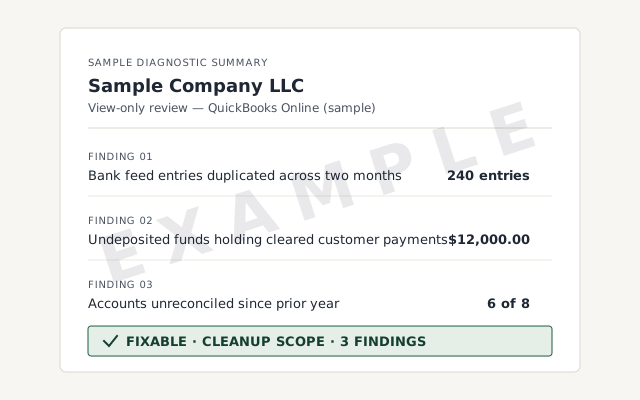
 Sample workflow — not a specific client’s data
A real 6123 diagnostic
The written read-out that tells you whether it is a mismatch or genuine file damage.
Error 6123
Connection to the company file lost — a mismatch you can fix, or real damage.
QuickBooks error 6123 means the program lost its connection to your company file, often while opening it or restoring a backup. Sometimes the cause is a network, antivirus, or version mismatch you can fix yourself. Sometimes it is genuine damage to the file, which needs repair. The first job is telling the two apart.
Who this affects
6123 is unusual because it sits on the line between a simple fix and a serious one. You will often see it moving a file between computers, restoring a backup, or opening a file made in a different QuickBooks version. In those cases it is a mismatch you can resolve. But 6123 is also thrown by a genuinely damaged file, so it is the one error where you should not assume it is harmless.
Start here
6123 — a mismatch you can fix, or a damaged file?
Likely a DIY fix
Version mismatch, antivirus, or hosting during a restore causes many 6123s — the steps below clear them.
Likely file damage
If 6123 blocks the file even on the machine that made it, with matching versions, corruption is the likely cause.
See file repairFix it yourself
Work these in order. They rule out the network and version causes, which account for many 6123 messages, before you treat it as file damage.
Open the file with the same QuickBooks year and edition that created it. Restoring a newer file into an older program is a common 6123 trigger.
Copy the backup to the computer's local drive first, then restore. Restoring straight from a network drive or USB stick often drops the connection.
Temporarily turn off third-party antivirus and add QuickBooks as an exception. Security software can lock the file mid-restore and trigger 6123.
On the machine doing the restore, switch hosting off so nothing else is holding the file, then restore into single-user mode.
Open a QuickBooks sample company. If the sample opens but your file still throws 6123, the problem is your file, not the program.
Ruling out the mismatches, in order
When to call us
If 6123 still blocks the file after you have matched versions, restored locally, and cleared antivirus — especially on the computer that created the file — the cause is the file itself. Repeated restore attempts on a damaged file can overwrite your last good backup, so stop there. A file repair recovers the data structure; a rescue is for a file that will not open or has already lost data. We work on a copy, never your original file, so nothing gets worse while we diagnose — and where a Desktop repair needs admin-level access, it runs over a screen-share or a hosted copy you control. And if your symptom is slightly different, two siblings cover it: error -6189, -816 when another session or a stale transaction log holds the file, and the H202 guide when workstations cannot reach the file on its host in multi-user mode. If QuickBooks itself will not launch at all — "could not initialize license properties," before any company file is involved — that is error 3371, an activation problem on the machine rather than anything in the file.
Mismatch or damage — and when to stop
Sample workflow — not a specific client’s data
The written read-out that tells you whether it is a mismatch or genuine file damage.
We test on a copy first, so a damaged file is never made worse. See what repair involves.
See QuickBooks file repairA written reply within one business day.
No. Many 6123 messages come from a version mismatch, antivirus, or restoring over a network — all fixable without repair. But unlike most errors, 6123 is also a genuine corruption signal. If it persists after the simple steps, treat the file as damaged rather than retrying.
Restoring is where 6123 shows up most. Common causes are restoring a newer file into an older QuickBooks, restoring straight from a network drive or USB, or antivirus locking the file mid-restore. Restore locally, with matching versions and security paused, and it usually goes through.
Not on a file you suspect is damaged. Each failed attempt can overwrite a good backup or write more bad data. Try the simple fixes once. If 6123 stays, stop and have the file diagnosed on a copy before you lose the last version that still opens.
It can be. In multi-user, 6123 often traces to a hosting or Database Server Manager conflict rather than a damaged file — closer to an H202 situation. Confirm hosting is set correctly on the server first. If single-user on the host still fails, then look at the file itself.
Sometimes. File Doctor — part of Intuit's free Tool Hub — repairs the network and file-access causes of 6123, so it is worth one run after the manual steps. What it cannot reliably fix is genuine data damage. If 6123 survives File Doctor, treat the file as damaged and stop retrying restores.
File repair rebuilds the data structure of a file that still opens but throws errors. Rescue is for a file that will not open at all or has already lost data. 6123 can land in either camp, which is why we diagnose first and tell you which one your file actually needs.